Wondering whether a place on 30A should be your personal beach retreat or a short-term rental workhorse? That question matters more than ever in Santa Rosa Beach, where one street can feel quiet and residential while the next is built around vacation traffic, beach access, and walkability. If you are weighing lifestyle, flexibility, and rental potential, this guide will help you sort through the real tradeoffs so you can buy with more clarity. Let’s dive in.
Why this choice is different on 30A
Along South Walton’s 26 miles of Gulf shoreline, you are not shopping one uniform market. You are choosing among 16 distinct beach neighborhoods, each with its own pace, layout, and visitor appeal. Santa Rosa Beach itself is the oldest and largest neighborhood, stretching from Choctawhatchee Bay to the Gulf.
That means your decision is often less about whether you want a second home or a short-term rental in general and more about where on 30A you want to own. A home near a busy access point or in a walkable resort-style setting can function very differently from a property in a quieter, more nature-forward pocket.
Visitor demand in Walton County also shapes the conversation. In Winter 2024 alone, Walton County reported 499,300 visitors, 603,300 room nights, and $591.1 million in direct spending. Travelers said they came for beautiful beaches, clear water, relaxation, comfort, safety, and family vacation time.
That strong leisure demand supports vacation homeownership, but it does not mean every property should be treated like a rental. The best choice depends on how you want to use the home and how much operational responsibility you are willing to take on.
Second home vs short-term rental
A second home is usually about personal enjoyment first. You may care most about your favorite beach access, a calmer setting, extra owner storage, and finishes that match your taste. Rental income may still matter, but it is often secondary to how the home feels when you use it.
A short-term rental is different. In practice, it operates more like a hospitality asset with rules, turnover demands, guest communication, and compliance requirements. If you go this route, you are not just buying a beach property. You are buying an ongoing operation.
A hybrid approach is also common on 30A. Many buyers want a home they can enjoy part of the year and rent during peak travel windows. That can work well, but it still requires you to evaluate the home through both a lifestyle lens and an operations lens.
Santa Rosa Beach micro-location matters
Santa Rosa Beach and the broader 30A corridor offer very different neighborhood identities. Grayton Beach is known for a relaxed, bohemian feel and natural beauty. Seagrove is framed as a classic beach vacation destination, while Seaside is known for colorful, walkable design and vacation-friendly condos.
WaterColor blends a small-town atmosphere with luxury accommodations and outdoor amenities. Rosemary Beach has a romantic town-center feel with cobblestone streets and winding paths. Seacrest mixes laid-back charm with a lively town center and a range of cottages, condos, villas, and resorts.
For you as a buyer, these differences affect both daily enjoyment and rental positioning. A quiet pocket may fit a personal retreat better, while an amenity-rich, walkable community may be easier to market to guests. On 30A, the right answer often comes down to the exact street, sub-neighborhood, and beach access experience.
When a second home may fit better
If you picture your 30A property as a place to unplug, host family, and return to year after year, a second-home-first strategy may make more sense. Neighborhoods with a calmer, more local, or nature-oriented feel can support that goal well. In the Santa Rosa Beach area, official neighborhood descriptions highlight trails, local dining, boutiques, art galleries, and state parks.
Grayton Beach also stands out for buyers who want personality and natural surroundings. Its relaxed atmosphere can appeal to owners who care more about experience than maximizing guest turnover. That does not mean a home there cannot be rented, only that the emotional use case may come first.
A second-home-first purchase can also give you more freedom in how you furnish and live in the space. You may accept a few personal quirks or less streamlined storage if the home works beautifully for your own routines. That flexibility is harder to maintain when guests are coming and going regularly.
When a short-term rental may fit better
If your goal is to offset ownership costs or build an income-producing vacation property, some 30A settings naturally support that plan. Communities with strong name recognition, walkability, established vacation patterns, and built-in amenities often feel more rental-ready.
Seagrove, Seaside, WaterColor, Rosemary Beach, and Seacrest all carry strong visitor-facing identities. These areas are described through features that travelers often value, such as walkable town centers, outdoor amenities, luxury accommodations, cottages and condos, and easy vacation appeal.
There is also evidence that South Walton already functions with a hospitality mindset. Walton County’s Winter 2024 visitor study found that 45% of visitors used vacation rental websites when planning, and 63% booked through a tourism vacation rental company. That kind of behavior supports demand, but it also raises the bar for presentation, communication, and guest experience.
What Walton County requires for short-term rentals
If you plan to use the property as a short-term vacation rental, Walton County has clear rules. The county defines a short-term vacation rental as a unit rented more than three times in a calendar year for stays under 30 days, or a unit advertised as regularly rented for those short stays.
Owners need annual registration with Walton County. Before county approval, you also need Florida Department of Revenue registration, a DBPR vacation rental license, and Walton County tourism development tax registration. Walton County moved to a new annual renewal schedule on February 2, 2026.
The county’s operating standards are important to understand before you buy. Each dwelling unit needs its own certificate, and that certificate does not transfer when a property is sold. So if you purchase a home that has been rented before, you still need to plan for your own registration process.
You also need a county-approved local responsible party. That person must be available by phone 24/7, able to respond within one hour, and conduct weekly monitoring. This is one of the clearest examples of how a short-term rental becomes an active management decision, not a passive one.
Rules that affect day-to-day operations
Walton County requires lease or rental agreements to state maximum occupancy, noise rules, trash pickup, evacuation expectations, and parking information. That tells you a lot about what matters in this market. Guest communication is not optional. It is part of operating responsibly.
The county also states that short-term vacation rentals are for residential use only. They cannot be marketed as event venues, wedding locations, or corporate gathering spaces. If you were hoping to create extra income through event-based use, that is not the path here.
Parking deserves close attention as well. Walton County Code Compliance proactively enforces parking violations along CR 30A and nearby beach access parking areas. In a beach market with limited curb space, guest parking instructions can directly affect how smoothly your rental operates.
Beach access can shape value and use
One of the biggest practical factors on 30A is beach access. Walton County maintains 58 public beach access points, including nine regional accesses with parking, restrooms, and lifeguards. The county tourism department also notes that its map can help identify county-owned or public beach access, state parks, bay and lake access points, and privately managed beaches.
For you, that means the beach experience is not the same from one property to another. Some homes may sit near public access points, while others are tied more closely to neighborhood or privately managed beach areas. That difference can influence both your owner experience and guest expectations.
If the home is for personal use, you may care most about the ease and feel of getting to the beach. If the home is for guests, you need to think about whether the access situation is easy to explain and easy to use. Simplicity matters when travelers are arriving for a short stay and want a low-friction experience.
Furnishing choices change with your goal
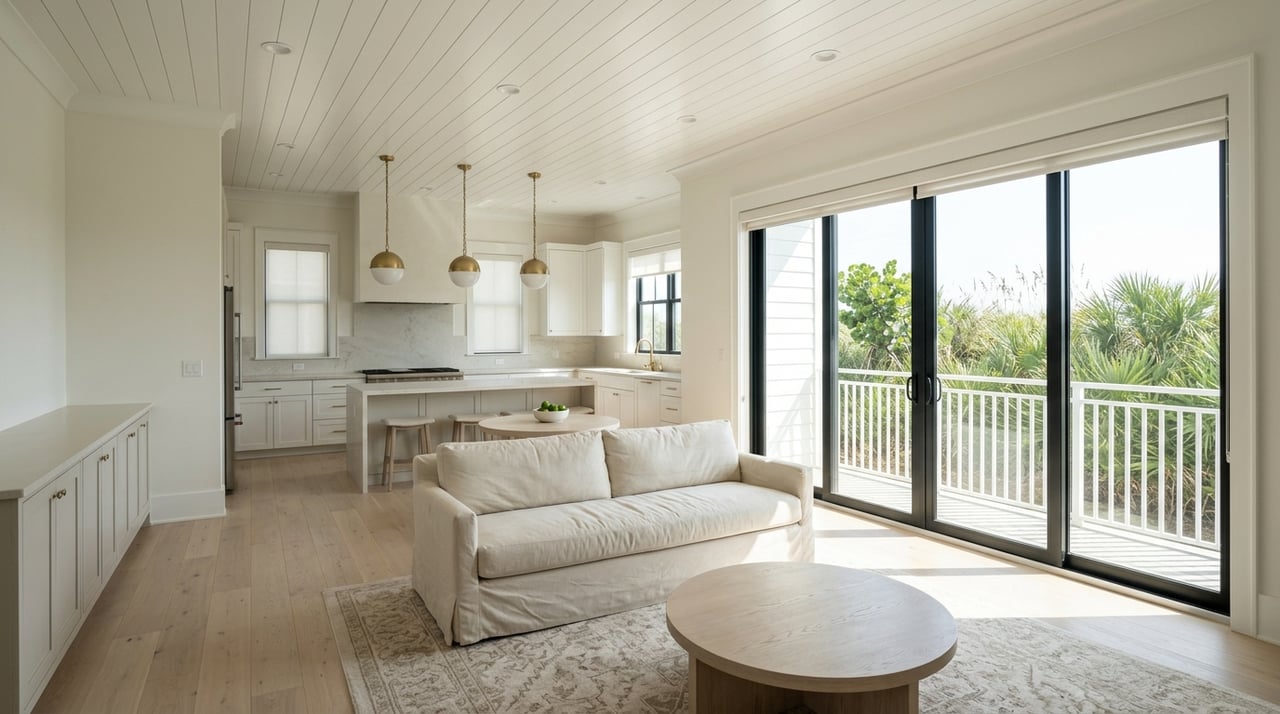
The gap between a second home and a short-term rental often shows up fast in the interiors. A second home can reflect your personal style, your favorite pieces, and your own comfort preferences. A rental property needs to be durable, easy to clean, and easy to photograph.
Vacation rental design guidance cited in the research points toward practical decisions like avoiding hard-to-clean textiles, using weather-resistant outdoor furniture, and choosing furnishings built for heavy use. It also recommends neutral foundations, functional layouts, and secure owner-only storage for personal belongings.
In South Walton, guest expectations are shaped by beach travel patterns. Visitors say they come to relax and spend time with family, so the best setups tend to feel comfortable, uncluttered, and simple to navigate. If a property feels too personal or hard to maintain, that can make turnover and guest experience harder.
Management is often the deciding factor
Many buyers can afford the home but underestimate the work behind a successful short-term rental. Bookings in vacation-oriented communities can happen far in advance. One official WaterColor article notes that beach rental homes can often book up to a year ahead.
That kind of demand is helpful, but it also means your systems need to be ready. You need clear house rules, fast response times, cleaning coordination, parking guidance, and a reliable local support structure. If you do not want that level of involvement, a second-home-first approach may feel far more rewarding.
This is why I often frame the decision as personal retreat versus managed hospitality asset. Neither option is automatically better. The better option is the one that matches how you want to spend your time, how involved you want to be, and what kind of ownership experience you want on 30A.
Questions to ask before you buy
Before you make an offer, it helps to pressure-test the property from both angles.
- How often will you personally use the home each year?
- Is the exact location better suited to quiet personal use or guest traffic?
- What type of beach access is nearby?
- Is the property south of the bay, where the tourist development tax rate is 5%, or north of the bay, where it is 3%?
- What are the parking realities for owners and guests?
- Does the community setup support short-term rental use?
- Are you comfortable with registration, licensing, and local responsible party requirements?
- Do you want to manage a hospitality-style operation, or would that feel like a burden?
If you can answer those questions honestly, your path usually becomes much clearer.
The smart way to decide on 30A
On 30A, this choice is rarely just financial and rarely just emotional. It sits at the intersection of lifestyle, neighborhood fit, operations, and local regulation. The same home that feels perfect as a second home might be frustrating as a rental, and the property that performs well with guests may not feel like your ideal personal escape.
That is why local guidance matters so much in Santa Rosa Beach and the wider South Walton market. You want to evaluate the specific neighborhood, the access story, the county rules, and the day-to-day reality before you commit. If you want help sorting through second-home options, rental-ready properties, or a hybrid strategy on 30A, Catriese Johnson would love to help you make a clear, confident move.
FAQs
What is considered a short-term rental in Walton County?
- Walton County defines a short-term vacation rental as a unit rented more than three times in a calendar year for periods under 30 days, or one advertised as regularly rented for those short stays.
What permits are needed for a short-term rental on 30A?
- Before Walton County approval, you need Florida Department of Revenue registration, a DBPR vacation rental license, Walton County tourism development tax registration, and annual county registration.
How does beach access affect a 30A second home or rental?
- Beach access affects convenience, guest expectations, and how a property functions day to day because homes may rely on public, neighborhood, or privately managed beach access.
Which 30A areas may feel better for a second home?
- Based on official neighborhood descriptions, calmer or more nature-forward areas such as parts of Santa Rosa Beach and Grayton Beach may appeal more to buyers who want a personal retreat first.
Which 30A areas may be more rental-ready?
- Based on official neighborhood descriptions, places like Seagrove, Seaside, WaterColor, Rosemary Beach, and Seacrest often have the walkability, amenities, and visitor identity that support short-term rental appeal.
Does a short-term rental certificate transfer with a home sale in Walton County?
- No. Walton County states that each dwelling unit needs its own certificate and that the certificate does not transfer when a property is sold.