Dreaming about building your own place near the Gulf someday? Buying land in Mexico Beach can be an exciting first step, but a beautiful lot is only part of the story. If you want future beach living to work the way you imagine, you need to look closely at zoning, floodplain rules, utilities, and recorded restrictions before you buy. Let’s dive in.
Why Mexico Beach Draws Future Homeowners
Mexico Beach is a small Gulf-front city with about 1,000 year-round residents. The city highlights 3.1 miles of white-sand beach, public beach access, canal access, a public boat ramp, and public parks, which all help shape the long-term appeal of owning land here.
For many buyers, the goal is not just owning a vacant parcel. It is about creating a future lifestyle that may include beach access, boating, fishing, or simply having a place near the water. That lifestyle value is a big part of what makes land in Mexico Beach worth a closer look.
The city is also rebuilding its public pier with FEMA, with a target of 2027. That detail matters because public amenities can influence how you think about long-term enjoyment and future use.
Start With the Lot’s Real Buildability
When you buy land in Mexico Beach, the biggest mistake is assuming every lot can support the same plan. Two parcels can look similar on a map but have very different rules attached to them.
Before you get too attached to a property, focus on four basics:
- Zoning district
- Floodplain status
- Utility access
- Recorded restrictions or easements
These factors can shape what you can build, how you can build, and how much time and money it may take to get there.
Check Zoning Before Anything Else
Mexico Beach has a mix of zoning districts, including Residential-Low Density, Residential-General, Tourist Residential, High Density Residential, General Commercial, Tourist Commercial, Public/Institutional, Preservation, and Tourist Mixed Use. That means land here is not one simple market.
In practical terms, most parcels will fall into one of three broad categories: residential build sites, mixed-use or resort-oriented parcels, and commercial sites. Your plans for the property need to match the parcel’s mapped district.
Why zoning matters for future plans
The city’s Land Development Regulations make it clear that future use is not something to guess on. Residential development is allowed in General Commercial and Tourist Commercial districts, but commercial development is not allowed in residential districts unless a Comprehensive Plan provision, plan amendment, or approved PUD allows it.
The Tourist Mixed Use district is broader. It can include single-family homes, multi-family homes, temporary lodging, neighborhood and community-scale commercial, marinas, and other resort-oriented uses.
If you are thinking long term, this matters a lot. A parcel that works for a future custom home may not work for mixed-use goals, and a parcel that looks flexible may still require approvals.
Approval paths can affect your timeline
The Mexico Beach Planning & Zoning Board reviews rezoning requests, site plans, variance requests, and other land development items. That means due diligence is not just about location. It is also about understanding whether your future use is already permitted or whether you may need a longer approval process.
Floodplain and Coastal Rules Matter
In a coastal market like Mexico Beach, floodplain review should be near the top of your checklist. The city’s floodplain rules apply to areas of special flood hazard and adopt FEMA flood maps by reference.
Just as important, the city code says all floodplain conditions must be met before a building permit can be issued. If you are planning a future beach home, this is a major part of buildability.
Coastal construction has added standards
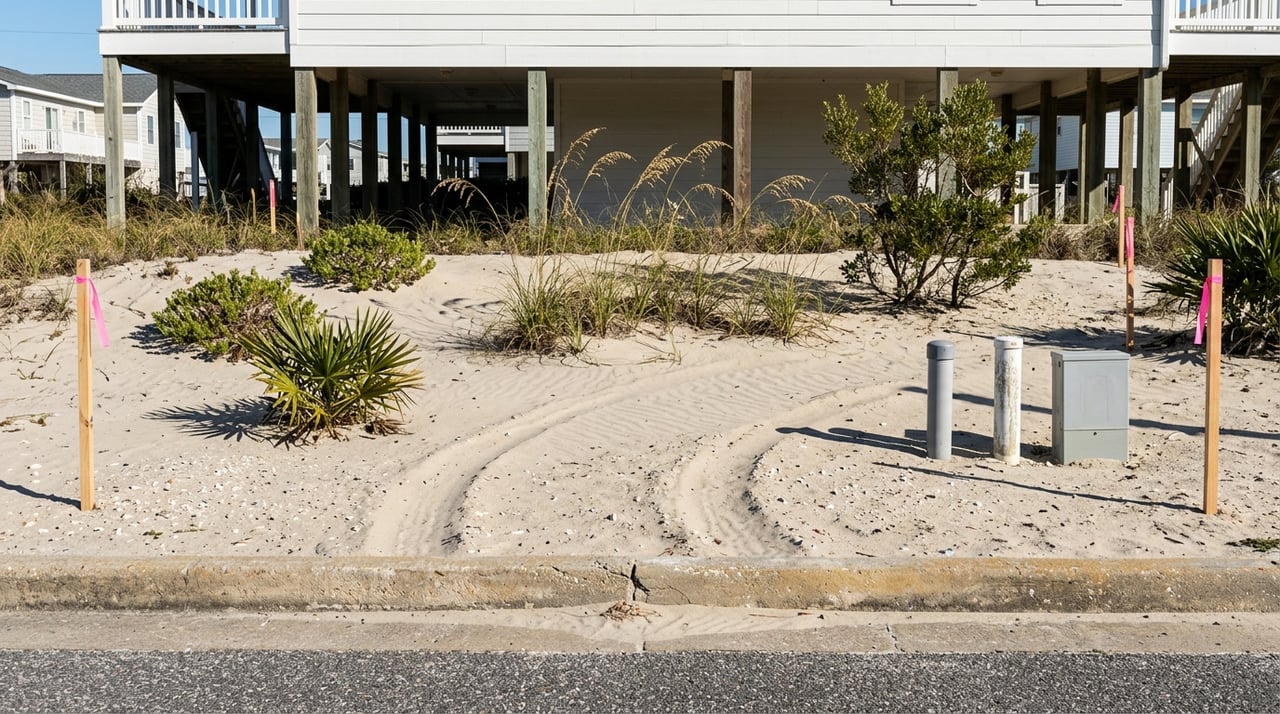
Near the shoreline, future construction may be affected by environmental and design rules. Mexico Beach prohibits dune disturbance, and its sea turtle protection standards limit beach-facing lighting for new coastal construction.
The city states that building permits are not granted unless proposed development complies with those turtle-protection standards in the applicable coastal areas. So if your dream home includes a certain layout or lighting design, it is smart to evaluate those details early.
Utilities and Site Access Are Not Small Details
A vacant lot can seem simple until you start looking at how it will actually function. In Mexico Beach, water and wastewater service comes from Bay County, while the city handles billing.
The city’s posted minimum monthly bill is $138.76, including water, sewer, sanitation, and utility tax. Even before a home is built, that is a good reminder that carrying costs matter when you buy land for future use.
Clearing and site prep come with responsibilities
The city’s Public Works Department handles roadway maintenance, drainage, sanitation, and solid waste pickup. It also states that when a vacant lot is cleared, the property owner is responsible for disposing of the debris within 30 days of work starting.
If your plan is to clear the site, improve access, or prepare for construction later, that timing and responsibility should be part of your budget and planning.
Lot Splits and Combining Parcels
Some buyers look at land with the idea of splitting a larger parcel later or combining adjacent lots for a better homesite. Mexico Beach has a formal Lot Split or Combination application, and the current form shows a $300 fee plus notice costs and any utility-accessibility charges.
That process matters before you commit. A larger parcel does not automatically mean easy subdivision potential.
What the city requires
According to the city’s posted form, subdivision into three or more parcels requires plat approval, a development order before development or land clearing, and final City Council approval before any subdivided property is sold. A smaller split that simply restores two originally platted lots may be approved administratively if it does not violate the Comprehensive Plan or Land Development Code.
Before final approval, city staff must inspect the site to confirm utility services can be accessed by the new lot or parcel. In Residential-General and Residential-Low Density areas, newly created lots generally must be no more than 10% smaller than the median size of nearby lots and still must meet minimum lot size and design standards.
This is why lot dimensions, neighborhood context, and utility access should all be reviewed upfront.
Permits Involve More Than a Building Permit
Mexico Beach directs contractors and property owners to EPCI Code Services for permit information. The city’s permit-related materials include variance applications, future land use map and zoning changes, PUD applications, floodplain requirements, and lot split or combination forms.
That tells you something important: the path from vacant lot to finished home may involve several layers of review. It is not always as simple as buying land now and pulling a basic building permit later.
Site plan details count
The Land Development Regulations require site plans to show:
- Easements
- Rights-of-way
- Floodplains
- Wetlands
- Topography
- Existing zoning
- Ingress and egress
- Utility tie-ins
The regulations also require minimum floor elevations in flood-prone areas and a Bay County Public Health permit for on-site wastewater systems. In short, a lot should be evaluated for buildability, not just curb appeal or proximity to the beach.
Title Records Can Change the Picture
Zoning is only part of the story. Recorded documents can affect how a parcel can be used, accessed, or improved.
The Bay County Clerk is the official recorder of deeds, mortgages, leases, agreements, liens, and other instruments affecting real property. Those public records are where buyers and title professionals look for easements, covenants, restrictions, and other recorded items tied to the lot.
If you are buying for future beach living, title review helps you confirm whether the parcel fits your plan before surprises show up later.
Think About Long-Term Ownership Costs
Land ownership is often viewed as a lower-maintenance way to enter a beach market, but it still comes with ongoing costs and planning decisions. Utility-related charges, clearing costs, permit work, flood-related construction requirements, and holding time all matter.
If your long-term goal is to make the property your primary residence, Bay County’s property-tax calendar also becomes important. January 1 is the assessment date for the tax year and the date used to determine homestead eligibility, and homestead applications are generally due by March 1.
The county also states that homestead requires legal or beneficial title and permanent residency, and Save Our Homes portability can transfer up to $500,000 of benefit to a new homestead within three years. If your land purchase is part of a future full-time move, that timing can matter.
Rental Ideas Require Parcel-Specific Review
Some buyers consider future rental use as part of the land decision. In Mexico Beach, the safest approach is to treat that as a parcel-specific question.
Future rental use can depend on zoning, any PUD or other approval path, and any private restrictions found in the recorded title documents. Rather than assume income use is allowed, it is better to confirm how the specific lot lines up with your goals.
What Often Drives Future Value
No one can promise future appreciation, but several factors are especially important in Mexico Beach based on the city and county framework. These include:
- Zoning district
- Flood risk
- Utility access
- Lot size and shape
- Proximity to the beach or canal
- Recorded restrictions
These details can influence both your future use and your future resale options. A great location still needs the right legal and physical setup to support your plan.
A Smart Buying Strategy for Mexico Beach Land
If you are buying land in Mexico Beach for future beach living, think of the process as a sequence instead of a quick transaction. The parcel should support your long-term plan from both a lifestyle and due-diligence standpoint.
A smart review usually includes:
- Confirm the zoning district
- Check floodplain and coastal rules
- Verify utility access and site conditions
- Review recorded easements and restrictions
- Understand permits, approvals, or lot split requirements
- Compare the lot to your long-term living goals
That kind of preparation can help you avoid buying a parcel that looks good online but does not work the way you need it to.
If you are exploring vacant land in Mexico Beach and want a clear, local perspective on how a parcel fits your goals, connect with Catriese Johnson. She can help you look beyond the listing and think through the details that matter for future beach living.
FAQs
What should you check before buying land in Mexico Beach?
- You should review the parcel’s zoning district, floodplain status, utility access, and any recorded easements or restrictions before moving forward.
Can every vacant lot in Mexico Beach be used for a future beach house?
- No. What you can build depends on the parcel’s zoning, floodplain rules, site conditions, utility access, and any applicable coastal construction standards.
Does Mexico Beach allow lot splits for vacant land?
- Mexico Beach has a formal lot split or combination process, but approval depends on the parcel, utility access, lot size standards, and whether the request complies with the city’s Comprehensive Plan and Land Development Code.
Are flood rules important when buying land in Mexico Beach?
- Yes. The city’s floodplain rules apply in special flood hazard areas, and all floodplain conditions must be met before a building permit can be issued.
Can you buy land in Mexico Beach now and claim homestead later?
- Possibly, if you later meet Bay County’s homestead requirements for legal or beneficial title and permanent residency, and you apply by the county’s deadline.
How do environmental rules affect future construction in Mexico Beach?
- Mexico Beach protects dunes and applies sea turtle lighting standards in certain coastal areas, so future design and construction plans may need to meet those requirements.