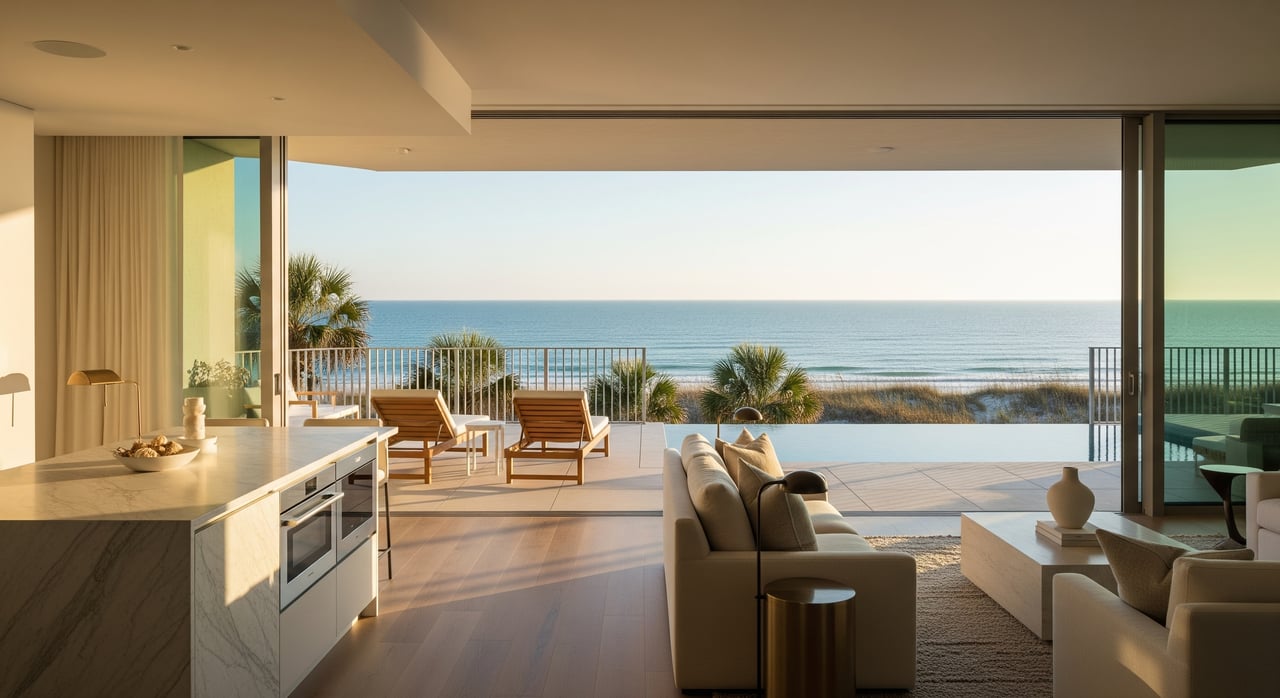
Have you found the perfect Destin condo, only to hear the words “non‑warrantable” from a lender? You are not alone. Many condos and condotels along the Emerald Coast fall into this category, and it can change how you finance the purchase. In this guide, you will learn what non‑warrantable means in Destin and Okaloosa County, why it happens so often here, which loan options still work, and how to move forward with confidence. Let’s dive in.
What non‑warrantable means
A warrantable condo meets standard criteria used by Fannie Mae and Freddie Mac. That usually allows a buyer to get a conventional conforming mortgage under regular program rules. A non‑warrantable condo does not meet one or more of those criteria, so you will need an alternative loan.
You will also hear the term condotel. A condotel is a condo that operates more like a hotel, with frequent short‑term rentals and often onsite rental management. Condotels commonly face extra hurdles with agency loans because of commercial‑like operations and rental activity.
The bottom line: non‑warrantable status affects loan availability, typical down payment, interest rate, and paperwork. It does not mean the unit is a bad investment. It simply means you will use a different financing path.
Why Destin condos go non‑warrantable
Short‑term rentals and condotels
Destin is a major vacation market. Many buildings allow frequent short‑term rentals, and some operate onsite rental programs. Heavy short‑term rental activity can push a project into non‑warrantable territory for agency underwriting.
Investor concentration
Resort areas often have a high share of investor‑owned units. Agencies limit single‑entity ownership and look for a healthy mix of owner‑occupied units. When investor concentration is high, agency approval is less likely.
Commercial or mixed use
Buildings that include significant commercial space, onsite management operations, or shared commercial amenities may be treated as mixed‑use. That can be a red flag for agency eligibility.
HOA litigation and reserves
Active litigation involving the association, high delinquent dues, or inadequate reserves can disqualify a project. Lenders also look closely at deferred maintenance and the current HOA budget.
Coastal insurance and flood risk
Many Destin condos sit in FEMA flood zones. Flood insurance availability, higher premiums, or insurer nonrenewals can affect lender appetite and the conditions you must meet.
Documentation and compliance
Missing or unclear condo documents, insurance issues, or nonstandard declarations can block agency approval. Having a complete condo package early is critical.
Your financing paths
You still have several ways to finance a non‑warrantable condo or condotel in Destin. Each option comes with its own terms, costs, and documentation.
Portfolio loans
- What they are: Loans a bank or credit union keeps in‑house instead of selling to agencies. This allows more flexible underwriting that can accept non‑warrantable projects.
- Typical terms: Down payments often run from the mid‑teens to 25 percent or more, with higher interest rates and fees than conforming loans. Many lenders expect 20–30 percent down for income properties or condotels.
- Pros: Flexibility and the ability to tailor approval to the project. Relationship banking can help.
- Cons: Higher cost and lender‑specific rules that vary.
DSCR investor loans
- What they are: Investor loans underwritten primarily to the property’s cash flow. Lenders look at the Debt Service Coverage Ratio, which compares net operating income to the annual mortgage payments.
- Typical terms: Often start at 20 percent down but can be higher. DSCR thresholds vary by lender. Rates and fees are higher than standard conforming loans.
- Pros: Useful if the unit’s rental income is strong or if your tax returns do not reflect traditional W‑2 income.
- Cons: Requires rental history, rent rolls, and profit and loss statements. Condotels with volatile income can be harder to approve.
Bank‑statement or asset‑based loans
- What they are: Loans that use bank statements or asset balances to document income rather than W‑2s or full tax returns.
- Typical terms: Often 20–30 percent down, with higher rates and tighter loan‑to‑value limits.
- Pros: Helpful for self‑employed buyers and investors with complex income.
- Cons: Higher cost and stricter equity requirements.
Hard‑money or private loans
- What they are: Short‑term, asset‑based financing from private lenders designed for speed.
- Typical terms: Short terms of 6–36 months, high interest, and equity of 30 percent or more.
- Pros: Fast closings and flexible approval.
- Cons: Intended as a bridge, not a long‑term solution.
FHA and VA financing
- What they are: Government‑insured loans that require condo approval at the project level or a single‑unit approval where allowed.
- Typical terms: When available, these allow lower down payments. Many vacation condos and condotels are not approved due to occupancy and rental factors.
- Pros: Lower down payments when the building qualifies.
- Cons: In a market like Destin, approvals for vacation condos and condotels are uncommon.
Seller financing
- What it is: The owner finances the purchase directly to you.
- Typical terms: Fully negotiable and can help when traditional lender options are limited.
- Pros: Creative path to close when a project is non‑warrantable.
- Cons: Depends on seller willingness and may include higher rates or larger down payments.
Down payment and rate expectations in Destin
For second‑home buyers, some agency‑eligible condos allow as little as 10 percent down. Once a project is non‑warrantable, you should plan for 15–25 percent or more depending on the lender and the project’s risk profile. For investors, 20–30 percent down is common for non‑warrantable condos and condotels.
Expect higher interest rates and fees for portfolio, DSCR, bank‑statement, or private loans compared with standard conforming mortgages. Loan limits are set by the lender on portfolio products, so pricing and caps vary across institutions.
Lender documents you will need
Gathering a complete package up front will save time and reduce surprises. Lenders typically ask for:
- Full condo and HOA documents: declarations, bylaws, rules and regulations, and articles of incorporation.
- HOA budget and financial statements for the current year.
- Reserve study or evidence of reserves and any special assessments.
- Recent meeting minutes.
- Litigation disclosures and details on pending or threatened lawsuits.
- Owner‑occupancy and rental schedules, including any rent rolls.
- Certificates of insurance for hazard, liability, and flood coverage.
- Management agreements if the building is professionally managed or operates like a condotel.
- Evidence of HOA dues status and any arrears.
- For DSCR loans: historical rental income, occupancy rates, and management company profit and loss statements.
- For portfolio or private loans: asset statements, bank statements, tax returns, or other items as requested.
Steps to move forward in Destin
Confirm project status early. Ask for the full condo package as soon as you are serious about a unit. A quick project review can reveal common non‑warrantable triggers.
Speak with lenders who do these loans. Local community banks, credit unions, and mortgage brokers in Northwest Florida often have portfolio or DSCR options tailored to vacation condos.
Verify rental rules and local ordinances. Destin and Okaloosa County have short‑term rental rules and licensing that affect cash flow and financing.
Price out insurance. Get preliminary quotes for flood and property coverage, including private markets and Florida’s state options, before you finalize numbers.
Model the numbers. If you are using a DSCR or investor loan, review historical rental performance and realistic expenses to understand your coverage ratio and cash flow.
Negotiate with the facts. If reserves are low, maintenance is deferred, or litigation is present, use that information to negotiate price or request seller credits.
Consider a bridge. If the building is working through an issue, some buyers use short‑term portfolio or private financing and refinance later if eligibility improves.
Negotiation tips for buyers
- Ask for concessions when the project’s status drives higher costs. Seller credits toward closing or rate buydowns can help.
- Tie your offer to documentation. Request HOA financials, insurance certificates, and litigation details within specific timelines.
- Plan for appraisal and underwriting questions. Provide rental history and management agreements if the unit is income producing.
- Keep close communication with your lender. Small differences in reserves, occupancy, or insurance can change loan terms.
Common pitfalls to avoid
- Underestimating insurance. Premiums and flood requirements can impact your budget and loan approval.
- Assuming FHA or VA will work. Many vacation‑market condos and condotels do not qualify.
- Waiting on documents. Delays in condo financials or litigation disclosures can stall underwriting.
- Overlooking rental rules. HOA or local restrictions can change cash flow and loan options.
When a non‑warrantable unit still makes sense
A non‑warrantable condo can still be a smart purchase in Destin. If you value personal use during peak seasons, or the unit shows strong historical rental income, alternative financing may fit the strategy. Many investors accept higher down payments in exchange for location, amenities, and demand during the Gulf Coast’s busy months.
The key is clarity. Understand the building’s status, line up the right lender, and confirm your numbers. With the right plan, you can own a great unit and keep your financing on track.
Work with a local advisor
You do not have to navigate non‑warrantable financing alone. A local, resort‑market agent who understands condo documents, lender expectations, and Destin’s rental landscape can help you identify the right properties, assemble the correct paperwork, and connect you with lenders who finance these deals. If you are considering a non‑warrantable condo or condotel in Destin or Okaloosa County, reach out to Catriese Johnson to map your options and move forward with confidence.
FAQs
What is a non‑warrantable condo in Destin?
- A condo project that does not meet standard Fannie Mae or Freddie Mac criteria, often due to short‑term rentals, investor concentration, mixed‑use elements, litigation, or HOA reserve issues.
Can I finance a condotel in Destin?
- Yes, but standard conforming loans are rare. Options include portfolio loans, DSCR investor loans, bank‑statement loans, or private financing, typically with higher down payments and rates.
How much down payment do I need for a non‑warrantable unit?
- Plan for roughly 20–30 percent down as a general rule, though exact requirements vary by lender, property type, and rental profile.
Will FHA or VA loans work for Destin vacation condos?
- Only if the project is on the approved list or eligible for a single‑unit approval where allowed. Many vacation condos and condotels do not qualify due to rental and occupancy factors.
How do I check if a building is non‑warrantable?
- Request the full HOA package and ask your lender for a project review. Red flags include heavy short‑term rental activity, pending litigation, limited reserves, single‑entity ownership, and excessive commercial space.
Does non‑warrantable status hurt resale value?
- Not necessarily. It can narrow the buyer pool because many buyers prefer agency financing, which can affect marketability. It also creates negotiation opportunities for informed buyers.