Two listings show water in the photos, but one is priced far higher than the other. If you are shopping, selling, or investing in Panama City, that gap can feel confusing. You want clear, local guidance so you can pay the right price or list with confidence. In this guide, you will learn how true waterfront, canal-front, and waterview homes differ in Bay County, why those differences matter, and how to price or evaluate them like a pro. Let’s dive in.
Quick definitions in Bay County
Understanding how the market uses these terms will keep you from mixing apples and oranges when you look at comps.
Waterfront (true waterfront)
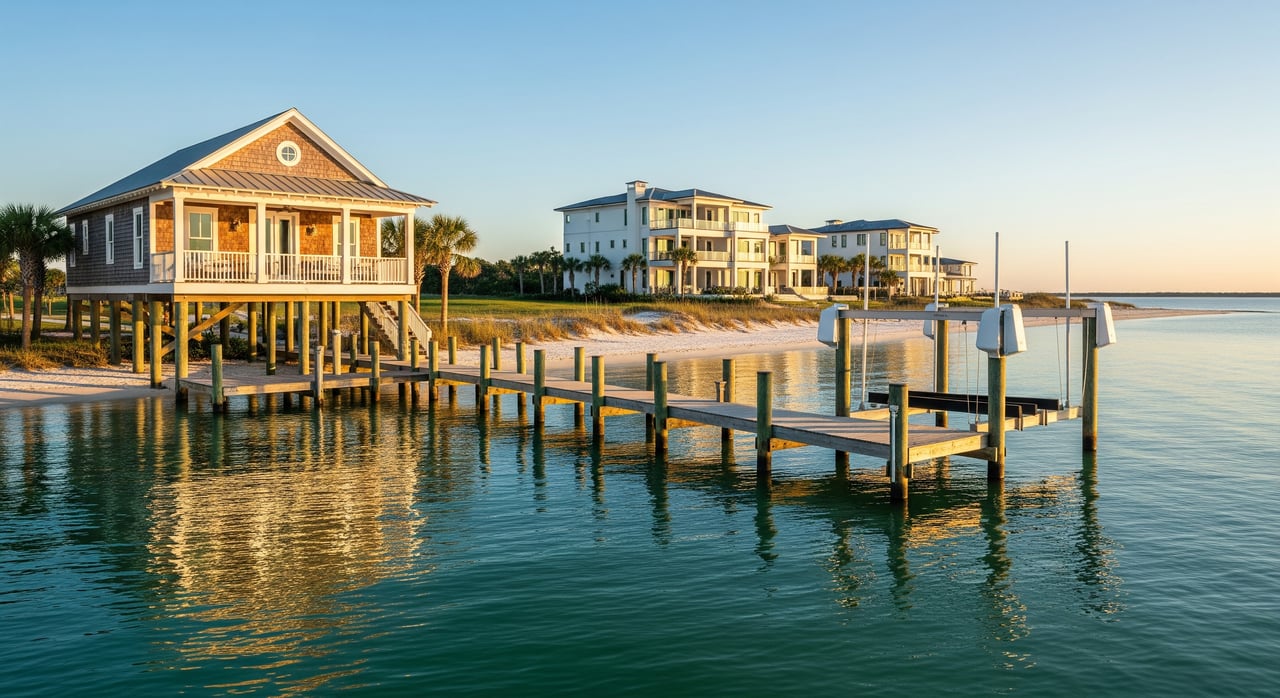
- A property with deeded riparian access where the lot physically touches a navigable body of water, such as St. Andrews Bay or a navigable canal.
- Buyers typically expect direct boat access, shoreline ownership rights, and either a private dock or an allowable dock site.
- In Florida, claims of waterfront should match the deed, survey, and the county parcel map. You can review parcel records and legal descriptions through the Bay County Property Appraiser.
Canal-front
- A property that fronts a man-made or natural canal. Local canals may connect directly to St. Andrews Bay or route through narrow, shallow, or bridge-limited passages.
- Navigability varies. Depth, low bridges, and locks can limit boat size and ease of access.
- Docking, seawall condition, and any shared easements strongly influence value and salability.
Waterview
- A property that has views of water but no direct frontage or dock rights, such as a home across a road from the bay.
- You get the aesthetic benefits, but usually not boat access.
- Insurance and flood exposure can be simpler than direct waterfront, which some buyers prefer.
Local geography to keep in mind
- Panama City’s shoreline spans open St. Andrews Bay and protected canal systems. Open bay offers wide views but higher wind and wave exposure. Protected canals are calmer but may limit access to open water.
What drives price differences
The premium you see in waterfront pricing is not just about the view. It is primarily about access, use, exposure, and risk.
Boating access and draft
If you want to boat or fish, direct, deepwater access to St. Andrews Bay is usually the top driver of price. Canals that require slow passage, have shallow segments, or include low fixed bridges tend to sell at a discount to open-bay frontage. The more seamless your route to open water, the higher the buyer demand.
Docks, lifts, and seawalls
Permitted, well-built shoreline improvements add value because they give you instant utility. A private dock with a boat lift in good condition is a strong positive. A failing seawall or unpermitted structure can reduce marketability and price. In Florida, work affecting submerged lands or the shoreline may require state approvals; learn more from the Florida DEP’s Submerged Lands and Environmental Resource Coordination program.
Views vs. use
A waterview home carries an aesthetic premium, which many lifestyle buyers love. Still, it usually trails a true waterfront home with dock rights because it lacks direct boating utility. If you do not plan to boat, a waterview can be a smart way to capture sunsets and scenery at a lower entry price.
Exposure, storm surge, and wave action
Open-bay frontage delivers unmatched panoramic views. It also brings more wind, wave, and storm-surge exposure than most protected canals. Flood zones and elevation levels affect financing and insurance, so confirm each property’s flood zone on the FEMA Flood Map Service Center.
Rarity and parcel size
Large bayfront parcels are scarce. Rarer lots with wide water footage and quality improvements can command a meaningful premium compared to more common waterview homes.
Liquidity and buyer pool
Waterfront attracts a more specific buyer profile, which can increase price volatility and days on market. Demand tightens in some cycles, then surges in others, especially around boat-friendly segments with clean access to St. Andrews Bay.
Insurance, flood zones, and carrying costs
Insurance and flood risk are key parts of the value picture in coastal Florida.
- Flood zones and elevation: Properties in higher-risk FEMA zones, such as AE or VE, often require flood insurance for financed buyers and can face higher premiums. Elevation certificates and mitigation features can reduce costs. Confirm the flood zone and consider ordering an elevation certificate early via the FEMA Flood Map Service Center.
- Wind and carriers: Private insurance markets along the coast change over time. If private coverage is not available, some owners obtain policies through Citizens Property Insurance Corporation. For market guidance and regulatory updates, check the Florida Office of Insurance Regulation.
- Docks, lifts, and seawalls: These may need separate coverage or endorsements. Storm damage to seawalls and pilings can be costly. Lenders may request documentation or holdbacks if shoreline structures need repair.
Permits, surveys, and shoreline work
If you plan to build or repair a dock, boat lift, or seawall, you will likely need both local and state approvals. Activities that affect submerged lands or occur seaward of the mean high water line may require coordination with the Florida DEP’s Submerged Lands and Environmental Resource Coordination program, in addition to local permits. Surveys that show the mean high water line and riparian boundaries help verify rights and avoid disputes. Permit timelines can affect closing dates, so plan ahead.
Smart comp strategy in Panama City
You will get more accurate pricing when you separate the market into three clear comp pools.
- Define the product
- Classify the subject as true waterfront, canal-front, or waterview. Note dock and lift condition, seawall status, and the first-floor elevation.
- Pull recent closed sales
- Start with the last 6 to 12 months. In slower segments, you may need to reach back farther. Use MLS and public records, including the Bay County Property Appraiser.
- Build three comp pools
- Primary: Same waterfront type with comparable lot size, dock or seawall quality, and similar access to St. Andrews Bay.
- Secondary: Canal-front homes with comparable navigability and similar run time to open water.
- Tertiary: Waterview homes with similar sightlines but no docking rights.
- Adjust for the big value drivers
- Dock presence and condition, permitted status, seawall condition and type.
- Navigability and draft limits, low bridges, or locks.
- Elevation, flood zone, and wind mitigation features.
- View quality, frontage width, parcel size, and recent shoreline work.
- Price-in risk and repairs
- Buyers account for expected seawall, dock, or piling costs, as well as higher insurance where applicable. If a dock is unpermitted or in poor condition, expect a discount.
- Validate with active market behavior
- Cross-check against current listings, pendings, and days on market within each pool to gauge buyer response at different price points.
A quick comp checklist
Use this list for each potential comp so you stay consistent:
- Address and parcel ID, with property type: bayfront, canal-front, or waterview
- Dock and lift: yes or no, permitted, and condition
- Seawall or bulkhead: type, condition, and permit status
- Navigability: depth constraints, fixed bridges, and direct access to St. Andrews Bay
- FEMA flood zone and whether an elevation certificate is on file
- Last sale date and price; days on market
- Recent improvements or storm repairs
- HOA rules or shared dock arrangements
- Insurance notes and visible wind mitigation features
When canal-front can rival bayfront
Not all canals are equal. In parts of Bay County, canal-front homes with quick, unobstructed, deepwater access to St. Andrews Bay can compete closely with some bayfront properties in similar price bands. Still, when view quality and exposure differ, open-bay frontage usually maintains a premium. Before you decide, verify access depth and path to open water using NOAA nautical charts, and confirm any local dredging or maintenance responsibilities.
Buyer tips for Bay County
- Verify navigability and draft. Ask about depth at mean low tide, bridge clearance, and whether the canal has any locks or siltation issues.
- Confirm flood zone and evaluate elevation. Check the FEMA Flood Map Service Center and consider obtaining an elevation certificate.
- Inspect docks, lifts, and seawalls. Look for aging pilings, spalling concrete, or unusual movement. Ask for permits and engineering reports if available.
- Price insurance early. Compare private quotes and understand your options with Citizens Property Insurance Corporation if needed.
- Validate parcel lines and rights. Review records via the Bay County Property Appraiser, and obtain a current survey for clarity.
Seller tips for Bay County
- Gather documents. Permit records for docks and seawalls, elevation certificates, and flood history help buyers move faster and with more confidence.
- Pre-list checkup. Consider a shoreline and dock inspection to address small issues before they grow into big objections.
- Market what matters. Highlight direct access to St. Andrews Bay, depth at low tide, lift capacity, and any wind or flood mitigation features.
- Price in the right pool. Do not mix waterview comps with true waterfront. Compare like with like and adjust for improvements and risk factors.
Your next step
Whether you are comparing options across the bay, evaluating a canal home with quick access, or maximizing the sale of your waterview property, the path to a smart decision starts with clear classification and verified data. Use flood maps, parcel records, shoreline permits, and real navigability checks to support your numbers. Then position your offer or list price based on the right comp pool.
If you want a local, data-backed pricing strategy for your waterfront, canal-front, or waterview home in Panama City, connect with Catriese Johnson. Let’s align the right valuation, marketing, and negotiation plan for your goals.
FAQs
In Panama City, do waterfront homes always sell for more than waterview?
- Generally yes, but the size of the premium depends on usable boat access, dock and seawall condition, and insurance and flood risk.
How much value does a private dock add in Bay County?
- It varies by dock condition, permitted status, and navigability; a well-built, permitted dock with direct bay access is a meaningful plus, while an unpermitted or failing dock can subtract value.
Will flood and wind insurance make a waterfront home unaffordable?
- Insurance raises carrying costs, especially in AE or VE zones, but mitigation and elevation can reduce premiums, and many buyers accept higher costs for direct access and views.
What should sellers disclose about shoreline and permits?
- Disclose flood history, any shoreline or dock work and permits, easements, HOA rules affecting docks or boats, and known seawall or piling issues.
How can I verify a canal’s navigability to St. Andrews Bay?
- Review NOAA nautical charts, ask about depth and bridges, and confirm any local dredging or maintenance obligations that could affect boat access.